Sublimation vs DTF: Which Is Better for Polyester Apparel?
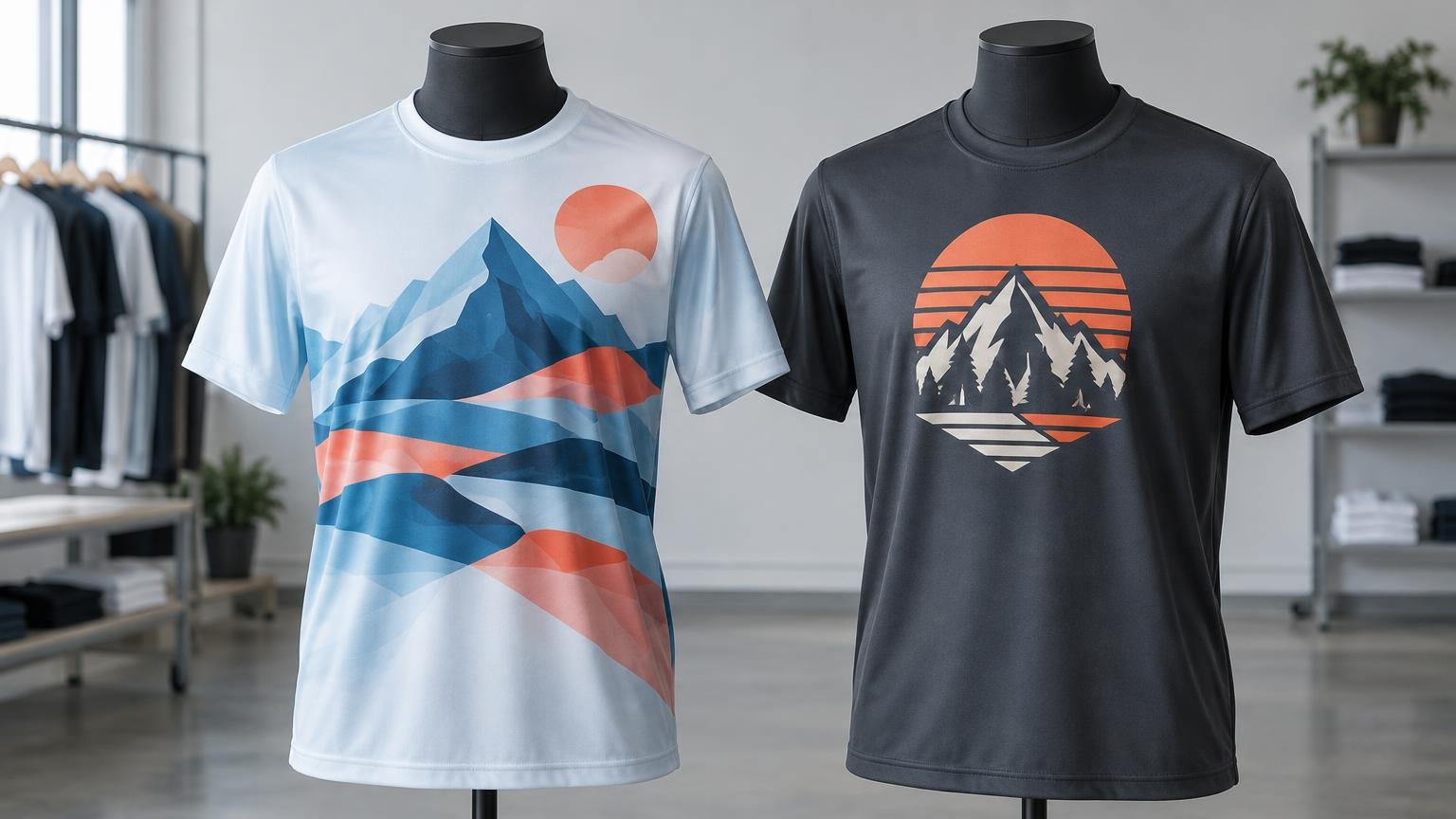
For white or light-colored polyester apparel, sublimation is usually the better choice when you want the design to become part of the fabric with no added transfer layer. Choose DTF when the polyester garment is dark, the artwork needs opaque white, or the same design must work across polyester, cotton and blended garments.
That is the practical answer to sublimation vs DTF: the garment and artwork decide the process. Neither method is universally better. Sublimation has a particularly clean fit with light performance polyester, while DTF provides broader compatibility across garment colors and fiber types.
Sublimation vs DTF at a glance
| Decision factor | Sublimation | DTF |
|---|---|---|
| Best fabric fit | Compatible polyester textiles | Cotton, polyester and blends |
| Garment color | White and light colors | Light, colored and dark garments |
| White or opaque elements | Not available in conventional sublimation | White ink supports opacity |
| How the decoration sits | Dye becomes part of the compatible material | Ink-and-adhesive transfer sits on the surface |
| Feel on apparel | No added print layer | A flexible surface layer whose feel depends on the transfer and coverage |
| Polyester blends | Result depends on polyester content and garment construction; test first | Can be suitable, subject to the transfer supplier’s application instructions |
| Compatible hard goods | Useful for compatible polymer-coated blanks | Do not assume compatibility; verify the exact DTF product and item |
| Main production concern | Substrate compatibility, color, heat and transfer control | Correct temperature, time, pressure, peel method and garment heat tolerance |
Sublimation uses heat to move dye into compatible polyester fibers or a polymer coating rather than attaching an opaque design on top. DTF uses printed film, adhesive and heat to apply a design to the garment surface. Cricut identifies DTF as suitable for cotton, polyester and blends, including dark fabrics, while describing sublimation as best suited to light polyester or sublimation-ready blanks.
Choose sublimation for light polyester and a surface-free finish
Sublimation is the stronger starting point for a white polyester performance shirt, team jersey or similar garment when you want the fabric to retain its original surface feel. Because the color enters the compatible material, there is no separate transfer layer covering the decorated area. That can be especially useful for a large design on lightweight apparel, where a broad surface transfer would be more noticeable.
Polyester is the key condition. The PRINTING United Alliance technical guide to sublimation heat-transfer printing identifies polyester as the strongest textile substrate for this process and recommends testing blends because color and fastness are less predictable. A garment being labeled “performance” is not enough by itself; check the fiber composition and any manufacturer restrictions before approving production.
Sublimation also works well for photographs, gradients and detailed multicolor artwork when the garment is compatible and light enough to provide the required background. The process does not print an opaque white base. White areas in the file are normally represented by the unprinted garment, and the garment color influences every translucent dye color placed over it.
That limitation is decisive on black, navy and other dark garments. Conventional sublimation cannot place an opaque white image over dark fabric. Even on a colored polyester shirt, the base color can shift the design: blue dye over a yellow garment will not behave like blue dye over a white garment. If accurate brand colors or white artwork are required, start with a white compatible garment or move to a process with opacity.
Choose DTF for dark polyester, mixed fabrics and opaque artwork
DTF is the more flexible choice when the garment is dark or the design needs white ink. Its printed and adhesive-backed construction creates an opaque surface decoration rather than relying on the shirt as the design’s white background. That makes a full-color logo easier to carry across black polyester, colored cotton and poly/cotton garments without rebuilding the artwork for every fabric.
This versatility is valuable when one order includes several garment types. A small brand might place the same chest graphic on a cotton retail tee, a polyester event shirt and a blended hoodie. DTF can simplify that mixed-garment job, provided the transfer supplier approves each fabric and the garments tolerate the required application conditions. Cricut’s current DTF guidance lists cotton, polyester and blends among its suitable fabrics.
DTF is also a practical candidate for fine lettering, gradients and complex color artwork. The important qualification is feel: the completed design remains a surface layer. A compact left-chest mark may feel unobtrusive, while a solid full-front rectangle will cover more fabric and be easier to notice. Artwork preparation matters here. Removing unnecessary background areas can reduce coverage without sacrificing the visible design.
Be cautious with polyester blends
A 50/50 cotton-polyester shirt does not behave like a 100% polyester sublimation blank. Sublimation primarily colors the compatible polyester portion, so the result can appear softer, heathered or less saturated than the same artwork on suitable white polyester. Fiber percentage provides a clue, but it does not guarantee an exact appearance. Yarn construction, garment color and finishing can also affect the result.
Use sublimation on a blend only when that intentionally faded or textured result suits the design and an actual sample has been approved. It is a poor choice when the buyer expects the same dense color shown on a compatible polyester sample. The industry guidance specifically advises testing blends rather than treating their performance as certain.
DTF is generally the more direct route when a blend needs an opaque, consistent-looking graphic. It does not depend on coloring only the polyester-compatible portion of the fabric. The tradeoff is the added surface layer, so the design’s total coverage and the intended use of the shirt still matter.
Which method feels softer?
On a compatible polyester garment, sublimation has the softer result in the specific sense that it adds no separate print layer. The wearer feels the garment surface rather than a transfer. This advantage becomes more noticeable as the decorated area grows.
DTF can still be soft and flexible; Cricut characterizes its transfers that way. But “soft” does not mean surface-free. The perceived feel changes with the transfer system, adhesive, curing, artwork coverage and application. A distressed graphic with open fabric between design elements will usually feel less substantial than a solid block of equal dimensions.
For a small sponsor mark, the difference may not drive the decision. For a large print on a lightweight running shirt, it can. In that situation, light polyester plus sublimation is usually the more natural pairing—assuming the garment color and artwork do not require white opacity.
Do not choose based on a universal durability claim
It is tempting to call one method the permanent or longer-lasting option, but a responsible comparison has to include the actual system and application. Sublimation avoids an attached surface film on a compatible material, while DTF depends on a properly applied ink-and-adhesive transfer. Those mechanisms create different failure risks, but they do not establish a universal wash-life winner for every supplier, garment and care routine.
For sublimation, compatibility, transfer control and adequate heat matter. Sawgrass publishes 400°F for 45 seconds at medium pressure as a starting point for polyester fabric, while emphasizing that substrate guidance, calibration and testing affect the result. That figure should not be treated as a universal recipe for every garment or ink system.
DTF settings can be substantially different and are equally product-specific. For example, STAHLS lists 290°F for 12–15 seconds at medium pressure for its UltraColor MAX product. That instruction applies to the named transfer, not to all DTF films or all polyester garments. The correct settings must come from the transfer supplier and be checked against the garment’s heat limitations.
Care instructions should follow the completed decoration system, not generic assumptions. Before approving a production order, request the supplier’s washing, drying and ironing guidance and make sure it can be communicated to the wearer.
Does quantity change the answer?
Quantity can affect the quote and workflow, but it does not override compatibility. A large run of black polyester shirts still needs an opaque-capable process if the artwork contains white. A one-off white polyester shirt can still be an excellent sublimation job.
Do not assume that DTF or sublimation is always cheaper at a particular quantity. Compare quotes using the same garment, print dimensions, number of locations, artwork and delivery requirement. If the design will be repeated in a larger run, it may also be useful to compare screen printing and DTF by quantity rather than limiting the decision to these two methods.
What about mugs and other hard goods?
Sublimation extends beyond apparel when the item has a compatible polymer coating or otherwise approved sublimation surface. That makes it relevant to suitable mugs and other prepared blanks as well as polyester textiles. Compatibility must still be confirmed for the exact blank.
Do not assume that an apparel DTF transfer is suitable for mugs or other rigid objects. DTF products and application systems vary, and the supplied apparel evidence does not establish general hard-goods compatibility. Use a process explicitly approved by its manufacturer for the particular item. If a project expands into a wider mix of printed products, Printiverse is a broader custom-printing destination to consider while defining the item list.
A practical decision checklist
Provide the following details before requesting a recommendation, sample or quote:
- Garment color: White and light colors keep sublimation viable; dark colors usually point toward DTF when opacity is required.
- Exact fiber content: Record the polyester, cotton and other fiber percentages rather than relying on a marketing name.
- Artwork requirements: Note white elements, exact brand colors, gradients, photographs, fine text and transparent areas.
- Print size and location: A large surface transfer affects feel more than a small chest mark. Confirm dimensions and placement using a production mockup; this front shirt design sizing guide provides a practical starting point.
- Intended use: Consider whether the apparel is for casual wear, performance activity, events or repeated organizational use.
- Item mix: Identify whether the design must work across cotton tees, polyester shirts, hoodies or compatible coated blanks.
- Application instructions: Obtain the exact temperature, time, pressure, peel and post-press directions for the selected product.
- Approval sample: Test the actual garment color and style when color accuracy, blend behavior or heat sensitivity matters.
- Care requirements: Confirm the decoration supplier’s wash and drying instructions before distributing or selling the apparel.
The final choice
Choose sublimation for white or light compatible polyester when you want the design integrated into the material and do not need opaque white. It is the clearest fit for large, colorful artwork on suitable performance apparel and for compatible polymer-coated blanks.
Choose DTF for dark polyester, cotton, blends and mixed-garment orders, especially when the artwork needs white ink or consistent opacity. Accept that the decoration is a surface transfer, then control its feel by keeping unnecessary solid coverage out of the artwork.
The best next step is not to debate the methods in the abstract. Confirm the garment’s fiber content and color, mark every part of the artwork that requires white or exact color, and test the intended garment with the supplier’s documented settings. Those details usually make the correct process apparent.